
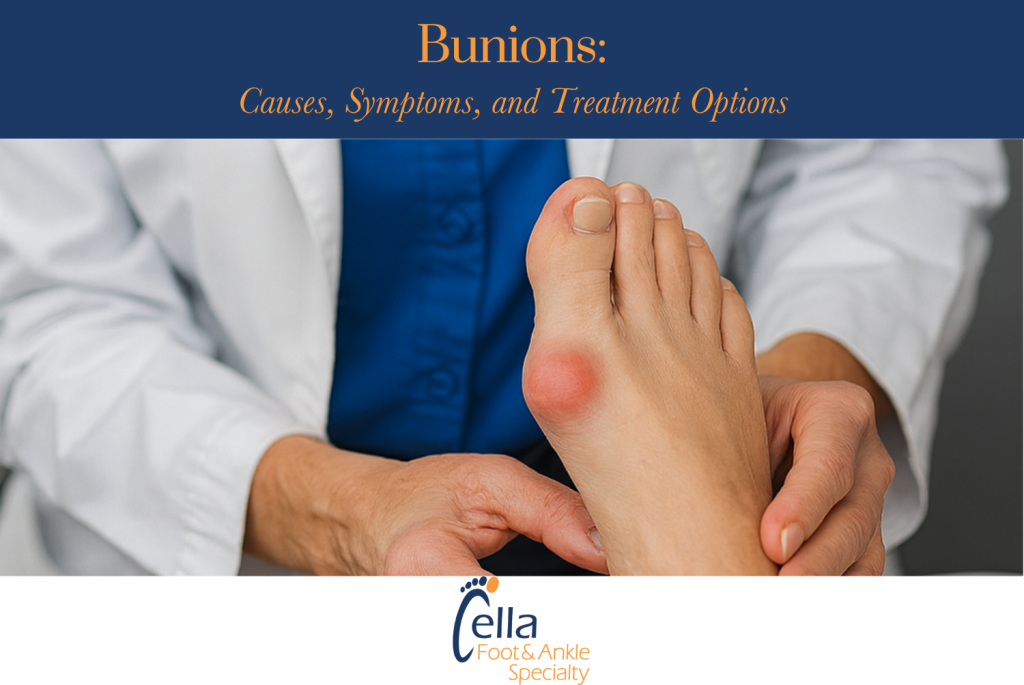
Bunions are one of the most common foot deformities treated at Cella Foot & Ankle Specialty, and they can cause significant pain, mobility issues, and shoe discomfort if left untreated. While they may start small, bunions can progressively worsen over time, impacting your daily activities and overall quality of life.
What Is a Bunion?
A bunion (medically known as hallux valgus) is a bony bump that forms at the base of the big toe joint. It occurs when the big toe gradually shifts toward the second toe, causing the joint to protrude outward. This misalignment not only alters the shape of the foot but can also cause pain, redness, swelling, and difficulty finding shoes that fit comfortably.
Common Causes of Bunions
Bunions typically develop due to a combination of genetic and mechanical factors, including:
- Inherited foot structure: Flat feet, loose ligaments, or abnormal bone structure can increase risk.
- Footwear choices: Tight, narrow, or high-heeled shoes can exacerbate the condition.
- Arthritis: Inflammatory conditions such as rheumatoid arthritis can weaken the joint.
- Injury or trauma: Foot injuries can disrupt alignment and joint stability.
- Occupational or lifestyle stress: Jobs or sports that place repetitive stress on the feet can contribute.
Symptoms of Bunions
Bunions can develop gradually, and symptoms may include:
- A visible bump at the base of the big toe
- Redness, tenderness, or swelling around the joint
- Calluses or corns where toes overlap
- Pain when walking or wearing tight shoes
- Restricted motion of the big toe joint
Conservative Treatment Options
Not every bunion requires surgery. In many cases, symptoms can be managed effectively through conservative measures, such as:
- Proper footwear: Choosing shoes with a wide toe box and good arch support
- Custom orthotics: Custom-made inserts that redistribute pressure and support proper alignment
- Padding and taping: Protecting the bunion from friction and relieving strain on the joint
- Anti-inflammatory therapy: Ice application or medication to reduce pain and swelling
- Physical therapy: Stretching and strengthening exercises to maintain mobility
These non-surgical methods can significantly improve comfort and slow the progression of the deformity, especially when addressed early.
When Surgery May Be Needed
If pain persists despite conservative care, surgical intervention may be considered. The goal of bunion surgery is to correct alignment, restore function, and relieve pain. There are various surgical techniques available, each tailored to the patient’s anatomy and severity of deformity.
At Cella Foot & Ankle Specialty, treatment recommendations are personalized to each patient. Dr. Cella carefully evaluates your symptoms, gait, and imaging results to determine the most effective path forward for long-term relief.
Q&A: Common Patient Questions About Bunions
Q: Are bunions caused only by wearing high heels or tight shoes?
A: While footwear can worsen bunions, the primary cause is usually genetic. However, poor shoe choices can accelerate their development or increase discomfort.
Q: Can bunions go away on their own?
A: Unfortunately, bunions are a structural deformity that do not resolve without treatment. Conservative care can manage pain, but only surgery can permanently correct the alignment.
Q: What happens if I ignore my bunion?
A: Over time, bunions can worsen, causing chronic pain, joint stiffness, and difficulty walking. Secondary issues such as hammertoes or bursitis may also develop.
Q: How do I know if I need bunion surgery?
A: If your pain interferes with daily activities, conservative treatments no longer help, or your toe alignment continues to worsen, surgery may be appropriate.
Q: How long is recovery after bunion surgery?
A: Recovery time varies depending on the procedure, but most patients resume light activity within a few weeks and return to normal walking within several months under their podiatrist’s guidance.
Q: Can bunions return after treatment?
A: Recurrence is rare with proper surgical correction and adherence to post-treatment care, but wearing appropriate footwear and maintaining follow-up visits is essential.
When to See a Specialist
If you notice a bump forming on your big toe or experience persistent pain, early evaluation can prevent further deformity and reduce the need for surgery. Dr. Cella and her team provide expert diagnosis and both conservative and surgical treatment options to restore comfort and mobility.
Contact Cella Foot & Ankle Specialty
Cella Foot & Ankle Specialty
📍 19-21 Fair Lawn Avenue, Suite 2A
Fair Lawn, NJ 07410
📞 Phone: (201) 773-6557
🌐 Website: cellafas.com
Whether you’re seeking relief from bunion pain or exploring options for long-term correction, our team is here to help you put your best foot forward—comfortably and confidently.
