
By Cella Foot & Ankle Specialty
What Is Posterior Tibial Tendon Dysfunction?
Posterior Tibial Tendon Dysfunction (PTTD) is a progressive condition that affects the tendon along the inside of your ankle and foot — the posterior tibial tendon. This tendon plays a critical role in supporting your arch and maintaining proper foot alignment during walking. When it becomes inflamed, stretched, or torn, the tendon can no longer provide adequate support, leading to a flattening of the arch and discomfort that worsens over time.
Causes and Risk Factors
PTTD can result from several causes, including:
- Overuse: Repetitive stress from activities such as running, hiking, or prolonged standing.
- Injury: A sudden fall or twist of the ankle can damage the tendon.
- Age and Degeneration: Natural wear and tear can weaken the tendon over time.
- Underlying Conditions: Obesity, diabetes, hypertension, and inflammatory arthritis increase the risk.
Women over 40 are particularly prone to developing this condition, though it can occur in anyone who places repeated strain on the tendon.
Symptoms of Posterior Tibial Tendon Dysfunction
Symptoms often progress through stages:
- Early Stage: Pain and swelling along the inside of the ankle and foot, especially after activity.
- Progressive Stage: Flattening of the arch and difficulty standing on tiptoes.
- Advanced Stage: Persistent pain, visible foot deformity, and arthritis in the ankle or hindfoot.
You may also notice your foot turning outward and the heel shifting, which changes the way you walk and can lead to secondary knee, hip, or back discomfort.
Diagnosis at Cella Foot & Ankle Specialty
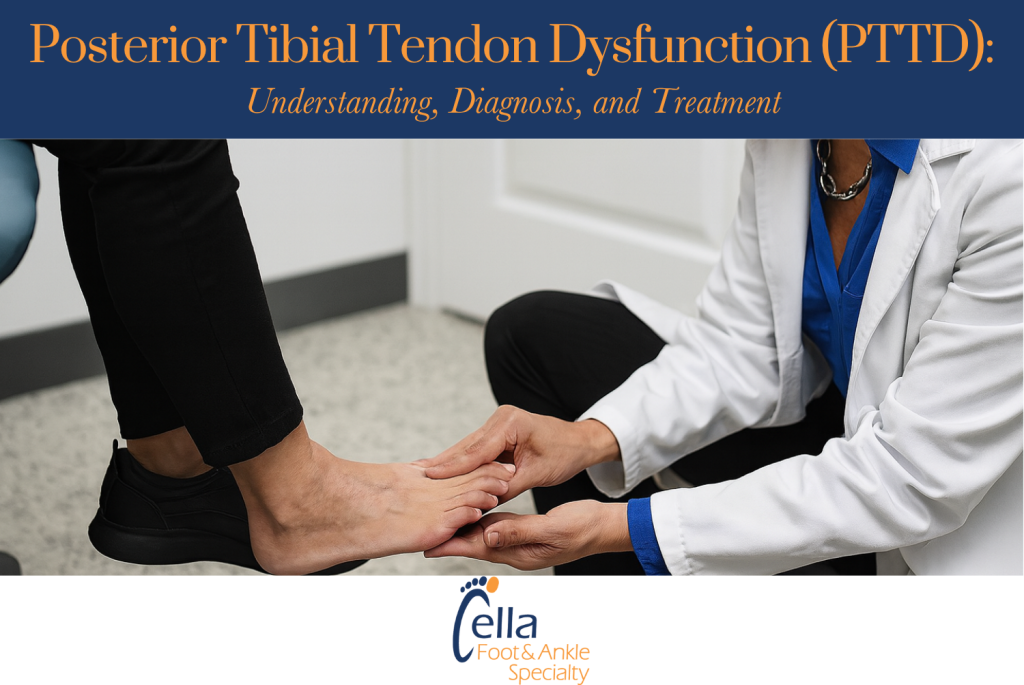
At Cella Foot & Ankle Specialty, diagnosis begins with a comprehensive clinical exam, gait analysis, and imaging when necessary.
Our diagnostic approach may include:
- Physical Exam: Assessing tenderness, swelling, and range of motion.
- Ultrasound or MRI: To visualize tendon inflammation or tears.
- X-rays: To evaluate structural changes or flattening of the arch.
Early diagnosis is crucial — prompt treatment can often prevent long-term deformity or surgical intervention.
Treatment Options
Treatment depends on the severity and stage of the dysfunction:
Conservative (Non-Surgical) Treatments
- Rest and Immobilization: Using a walking boot or brace to reduce strain on the tendon.
- Orthotics: Custom shoe inserts to support the arch and correct alignment.
- Physical Therapy: Targeted exercises to strengthen the posterior tibial tendon and surrounding muscles.
- Medications: Anti-inflammatory medications or corticosteroid injections to reduce pain and swelling.
- Extracorporeal Shockwave Therapy or Stem Cell Injections: Advanced regenerative treatments that may enhance tendon healing.
Surgical Treatments
If conservative therapy is not effective or the condition has progressed significantly, surgery may be required to repair or reconstruct the tendon and restore proper alignment. Dr. Cella specializes in minimally invasive surgical techniques to shorten recovery time and improve long-term outcomes.
Preventing PTTD
To protect the posterior tibial tendon and reduce your risk:
- Maintain a healthy weight.
- Wear supportive footwear—especially during exercise.
- Stretch and strengthen your calves and ankles regularly.
- Avoid overtraining or repetitive high-impact activities.
- Seek medical attention at the first sign of persistent ankle or arch pain.
Q&A: Posterior Tibial Tendon Dysfunction
Q: Can PTTD heal on its own?
A: Mild cases may improve with rest and supportive care, but untreated PTTD can progress and cause lasting structural damage. Early intervention is essential.
Q: How do I know if my flatfoot is caused by PTTD?
A: PTTD-related flatfoot usually develops in adulthood and is accompanied by pain and swelling along the inside of the ankle. A professional evaluation can confirm the cause.
Q: What is the recovery time for PTTD?
A: Recovery varies depending on the stage and treatment. Conservative therapy may take 3–6 months. Surgical recovery can take several months but yields lasting relief in most patients.
Q: Will custom orthotics really help?
A: Yes, orthotics are one of the most effective ways to offload pressure from the tendon, realign the foot, and slow disease progression.
Q: Is surgery always necessary?
A: No. Many patients find lasting relief through non-surgical care when treatment begins early. Surgery is typically reserved for advanced or chronic cases.
Contact Cella Foot & Ankle Specialty
If you’re experiencing ankle pain, arch collapse, or difficulty standing on your toes, don’t ignore the warning signs of posterior tibial tendon dysfunction. Early diagnosis and customized treatment can help you stay active and avoid surgery.
Cella Foot & Ankle Specialty
📍 19-21 Fair Lawn Avenue, Suite 2A
Fair Lawn, NJ 07410
📞 Phone: (201) 773-6557
🌐 Website: cellafas.com
