 Foot pain can affect nearly every part of your daily life. Walking, exercising, standing at work, or even enjoying time with family becomes difficult when every step feels uncomfortable. For many people, this discomfort is caused by the gradual loss of the natural fat pad that cushions the bottom of the foot. As this protective layer thins over time, pressure increases on the bones, joints, and soft tissues, leading to chronic pain and reduced mobility.
Leneva® is an innovative regenerative treatment designed to help restore this natural cushioning. Rather than simply masking pain, Leneva works with your body’s own healing processes to encourage the regeneration of healthy fat tissue in areas where natural padding has been lost. At Cella Foot & Ankle Specialty, patients have access to advanced treatment options like Leneva that are designed to improve comfort, function, and long-term foot health.
Whether you are experiencing pain from aging, previous surgery, diabetes-related fat pad loss, or years of high-impact activity, understanding how Leneva works can help you determine whether this regenerative solution is right for you.
What Is Leneva?
Leneva is an injectable human adipose extracellular matrix (AAM) that serves as a regenerative scaffold. Once injected beneath areas of the foot that have lost protective cushioning, it encourages the body to rebuild healthy fat tissue over time.
Unlike temporary fillers, Leneva supports the body’s natural regenerative process by providing a framework that promotes tissue remodeling. As new fat cells develop, patients often experience improved cushioning and reduced pain during standing and walking.
This minimally invasive treatment can help patients avoid more invasive procedures while addressing one of the root causes of forefoot pain.
Understanding Fat Pad Atrophy
What Is Fat Pad Atrophy?
The bottom of each foot contains specialized fat pads that absorb shock with every step. These structures protect the bones, nerves, tendons, and joints from excessive pressure.
As people age or experience certain medical conditions, these fat pads gradually become thinner, reducing their ability to cushion the foot.
Without adequate padding, everyday activities become increasingly painful.
Common Causes of Fat Pad Loss
Several factors contribute to thinning of the plantar fat pad, including:
- Natural aging
- Repetitive impact from sports
- Long-term standing occupations
- Previous foot surgery
- Trauma or injury
- Diabetes
- Certain inflammatory conditions
- Biomechanical abnormalities
- High-heeled shoe use over many years
Many patients experience a combination of these factors.
Signs You May Have Fat Pad Atrophy
Symptoms often develop gradually and worsen over time.
Common signs include:
- Pain beneath the ball of the foot
- Tenderness while walking barefoot
- Burning sensations under pressure points
- Feeling like you are walking directly on bone
- Pain that improves when wearing cushioned shoes
- Difficulty standing for long periods
- Increased formation of calluses
- Localized discomfort beneath the heel or forefoot
Because these symptoms overlap with other foot conditions, an evaluation by a foot and ankle specialist is important for an accurate diagnosis.
How Leneva Works
A Regenerative Scaffold
Rather than acting as a permanent implant, Leneva provides a biologic scaffold that supports your body’s natural healing response.
Following injection:
- The extracellular matrix encourages new tissue formation.
- Blood vessels grow into the treatment area.
- New fat tissue gradually develops.
- The regenerated tissue provides improved natural cushioning.
This regenerative process occurs over several months as the body rebuilds healthy soft tissue.
Long-Term Tissue Restoration
The goal of treatment is not simply to provide immediate volume but to stimulate the body’s own regenerative capabilities.
Because new tissue develops gradually, many patients experience progressive improvement over time rather than a sudden temporary effect.
Conditions That May Benefit From Leneva
Leneva may be considered for patients experiencing:
Fat Pad Atrophy
The most common indication involves age-related thinning of the natural cushioning beneath the forefoot or heel.
Metatarsalgia
Patients with pain beneath the ball of the foot caused by increased pressure may benefit from restored cushioning.
Painful Calluses
Excess pressure often leads to thick callus formation. Improving soft tissue padding may help reduce repetitive pressure.
Pain After Foot Surgery
Some surgical procedures may alter soft tissue distribution or contribute to fat pad loss.
Chronic Pressure Areas
Patients with recurrent pressure-related discomfort despite custom orthotics and supportive footwear may be candidates.
Who Is a Good Candidate?
Leneva may be appropriate for individuals who:
- Have chronic forefoot pain caused by fat pad loss
- Experience discomfort despite custom orthotics
- Have pain while standing or walking
- Want a minimally invasive treatment option
- Prefer regenerative approaches before considering surgery
- Have adequate circulation and healthy skin integrity
Every patient should undergo a comprehensive foot examination before treatment to determine whether Leneva is the most appropriate option.
What to Expect During Treatment
Initial Evaluation
Your podiatrist will evaluate:
- Medical history
- Foot structure
- Areas of pain
- Gait mechanics
- Imaging if necessary
- Previous treatments
A personalized treatment plan will then be developed.
The Injection Procedure
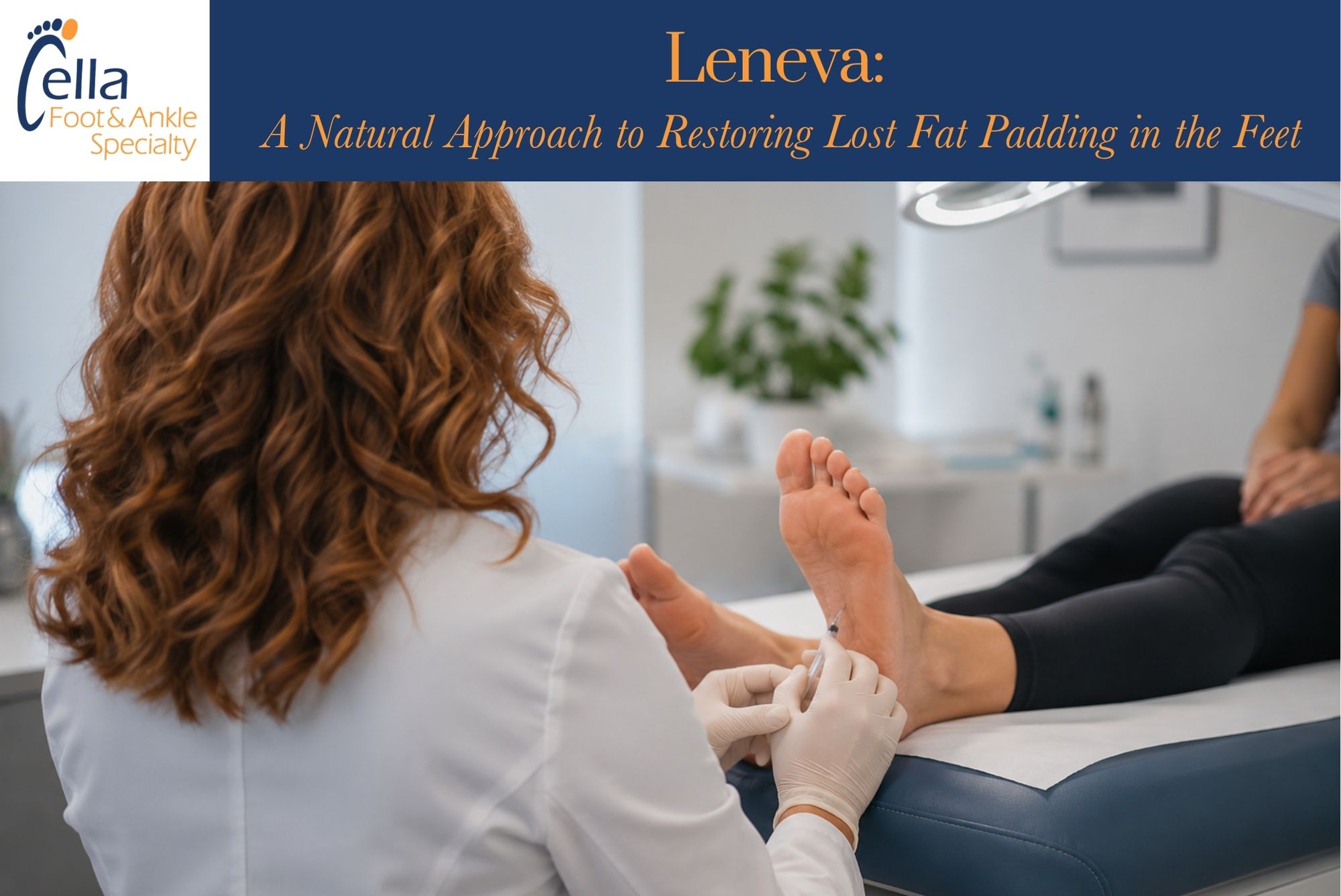
Leneva is injected into carefully selected areas beneath the foot using specialized techniques.
The procedure is performed in the office and generally requires only a short visit.
Local anesthetic may be used to maximize comfort during treatment.
Recovery
Most patients resume light daily activities shortly after treatment.
Your physician may recommend:
- Supportive footwear
- Activity modifications
- Temporary reduction of high-impact exercise
- Follow-up visits to monitor healing
As new tissue develops, cushioning gradually improves over several months.
Benefits of Leneva
Patients often choose Leneva because it offers several potential advantages.
Regenerative Rather Than Temporary
Instead of simply filling space, Leneva supports natural tissue regeneration.
Minimally Invasive
Treatment is performed without major surgery.
Reduced Foot Pain
Improved cushioning can decrease pressure on painful areas.
Improved Walking Comfort
Many patients find standing and walking become more comfortable after treatment.
Natural Tissue Development
The body’s own regenerative process creates new soft tissue over time.
Complements Other Treatments
Leneva can often be combined with orthotics, footwear modifications, and other conservative therapies.
Leneva Versus Traditional Treatment Options
Conservative care often includes:
- Custom orthotics
- Cushioned footwear
- Padding
- Activity modification
- Anti-inflammatory medications
While these treatments remain valuable, they primarily reduce pressure rather than replacing lost tissue.
Leneva offers a different approach by encouraging regeneration of natural cushioning beneath the foot.
For many patients, combining regenerative medicine with biomechanical support provides the best overall outcome.
The Importance of Early Treatment
Waiting too long to address fat pad atrophy can allow symptoms to worsen.
As protective cushioning continues to diminish, patients often change the way they walk to avoid pain. These altered walking patterns may contribute to additional stress on the knees, hips, lower back, and other areas of the foot.
Early evaluation allows your podiatrist to recommend appropriate interventions before chronic compensation patterns develop.
Why Choose Cella Foot & Ankle Specialty?
At Cella Foot & Ankle Specialty, patients receive individualized care using modern diagnostic techniques and advanced treatment options. Every treatment plan is tailored to each patient’s unique anatomy, lifestyle, and goals.
The practice focuses on relieving pain while preserving long-term foot function through evidence-based care. Whether conservative management or regenerative therapies like Leneva are recommended, the goal is always to help patients return to comfortable movement with confidence.
Leneva is part of a full range of regenerative and minimally invasive options at Cella Foot & Ankle Specialty, including Euflexxa for joint arthritis, amniotic fluid injections for tendon and ligament healing, and sclerotherapy for spider veins.
Frequently Asked Questions
What is Leneva used for?
Leneva is primarily used to help restore cushioning in areas where the natural fat pad has become thin, reducing pain caused by increased pressure on the bones and soft tissues.
Is Leneva considered surgery?
No. Leneva is a minimally invasive injectable treatment performed in the office.
How long does the procedure take?
Treatment is typically completed during a brief office visit, although appointment length varies depending on the number of treatment areas.
When will I notice improvement?
Because Leneva supports tissue regeneration, improvement develops gradually over several weeks to months as new tissue forms.
Is the treatment painful?
Local anesthetic is commonly used to improve comfort during the procedure. Mild soreness afterward is generally temporary.
Can Leneva replace orthotics?
Many patients continue using custom orthotics even after treatment. Orthotics help improve biomechanics while Leneva restores cushioning.
Who should not receive Leneva?
Certain medical conditions or active infections may make treatment inappropriate. A thorough examination will determine candidacy.
Can athletes benefit from Leneva?
Active individuals experiencing fat pad loss from repetitive impact may benefit if they are appropriate candidates.
Is fat pad atrophy permanent?
Without treatment, lost fat padding typically does not regenerate on its own. Leneva is designed to encourage the body to rebuild healthy cushioning.
Why should I see a foot specialist instead of treating this myself?
Many causes of foot pain produce similar symptoms. A podiatrist can accurately diagnose the underlying condition and recommend the most effective treatment plan.
Contact Information
Cella Foot & Ankle Specialty
19-21 Fair Lawn Avenue, Suite 2A
Fair Lawn, NJ 07410
Phone: (201) 773-6557
Website: https://cellafas.com
Reviewed by Dr. Antonella Cella, DPM, FACFAS — Cella Foot & Ankle Specialty, Fair Lawn, NJ