 Spider veins are a common concern that affects millions of adults. While many people view them as a cosmetic issue, they can also be associated with discomfort, aching, burning, swelling, or fatigue in the legs. Fortunately, modern treatments like sclerotherapy offer a safe, minimally invasive solution that effectively reduces the appearance of spider veins while improving leg comfort.
At Cella Foot & Ankle Specialty, we understand that healthy legs contribute to better mobility, confidence, and overall quality of life. If you’re bothered by visible spider veins or experiencing symptoms that interfere with your daily activities, sclerotherapy may be an excellent treatment option.
This guide explains how sclerotherapy works, who qualifies for treatment, what to expect before and after the procedure, and how it supports long-term vein health.
What Is Sclerotherapy?
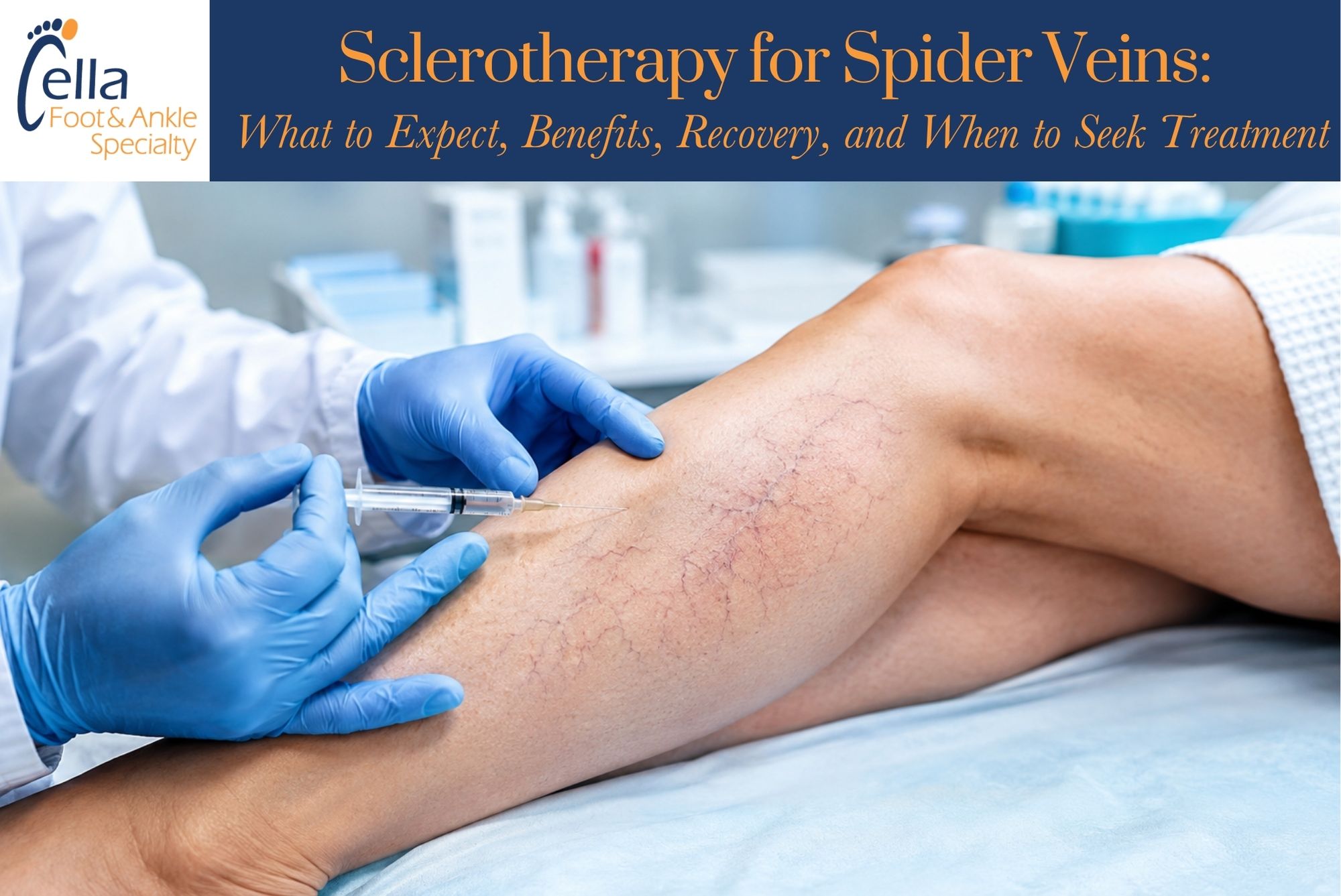
Sclerotherapy is a minimally invasive medical procedure used to treat spider veins and certain small varicose veins. During treatment, a specialized solution is injected directly into the affected vein. The solution irritates the vein lining, causing the vein walls to collapse and seal shut.
Over time, the treated vein is naturally absorbed by the body, and blood is redirected through healthier nearby veins. The visible appearance of the treated vein gradually fades over several weeks to months.
Sclerotherapy has been used successfully for decades and remains one of the most effective non-surgical treatments for superficial leg veins.
What Are Spider Veins?
Spider veins are tiny, damaged blood vessels located just beneath the skin’s surface. They often appear as:
- Red lines
- Blue veins
- Purple webs
- Branching patterns resembling spider webs
Spider veins commonly develop on the:
- Thighs
- Calves
- Ankles
- Feet
Although less common, they may also appear on the face.
What Causes Spider Veins?
Several factors contribute to the development of spider veins.
Genetics
Family history is one of the strongest risk factors. If close relatives have spider veins or varicose veins, you have a higher likelihood of developing them.
Aging
As we age, vein walls and valves naturally weaken, making veins more susceptible to enlargement and visible changes.
Hormonal Changes
Pregnancy, menopause, and hormonal medications can increase pressure within veins and contribute to spider vein formation.
Occupation
Jobs requiring prolonged standing or sitting place additional stress on the veins of the lower legs.
Weight Gain
Excess body weight increases pressure on leg veins, making vein disease more likely.
Previous Injury
Trauma to the legs may damage blood vessels and contribute to abnormal vein development.
Sun Exposure
Facial spider veins are often associated with long-term ultraviolet exposure.
Are Spider Veins Only Cosmetic?
Not always.
While many patients seek treatment because they dislike the appearance of spider veins, others experience symptoms including:
- Aching legs
- Burning sensations
- Itching
- Leg heaviness
- Fatigue
- Mild swelling
- Nighttime discomfort
These symptoms may indicate underlying venous insufficiency, which should be evaluated by a foot and ankle specialist.
How Does Sclerotherapy Work?
The procedure involves injecting a specialized sclerosant solution into the affected vein using a very fine needle.
The solution causes the vein to:
- Irritate internally
- Collapse
- Seal closed
- Gradually disappear as the body absorbs it
Healthy veins take over blood circulation immediately.
Because only damaged superficial veins are treated, circulation is not negatively affected.
Who Is a Good Candidate for Sclerotherapy?
Many healthy adults qualify for treatment.
Ideal candidates typically:
- Have visible spider veins
- Have small varicose veins
- Experience leg discomfort related to superficial veins
- Want a non-surgical treatment option
- Have realistic expectations
Patients should undergo a thorough medical evaluation before treatment to determine whether deeper vein disease is present.
Who May Need Additional Vein Evaluation?
Some patients require additional diagnostic testing before undergoing sclerotherapy.
You may benefit from further evaluation if you experience:
- Significant leg swelling
- Large bulging varicose veins
- Skin discoloration
- Leg ulcers
- History of blood clots
- Chronic venous insufficiency symptoms
Ultrasound imaging often helps identify deeper circulation problems that require treatment before cosmetic spider veins are addressed.
What Happens During the Procedure?
Sclerotherapy is performed in the office and usually takes between 20 and 45 minutes.
During treatment:
Initial Evaluation
The treatment areas are examined and mapped.
Cleansing the Skin
The skin is cleaned thoroughly to reduce infection risk.
Injection
Tiny needles inject the sclerosant into each targeted vein.
Compression
Compression stockings or wraps are often applied immediately after treatment.
Most patients tolerate the injections well. Mild stinging or burning typically lasts only a few seconds.
Is Sclerotherapy Painful?
Most patients describe only minor discomfort.
The needle used is extremely small, and the injections are generally well tolerated.
Some patients notice:
- Mild burning
- Temporary cramping
- Slight pressure
These sensations typically resolve quickly.
What Should I Expect After Treatment?
Recovery is relatively simple.
Patients are encouraged to:
- Walk immediately after treatment
- Wear compression stockings as directed
- Avoid prolonged sitting
- Resume light daily activities
- Stay hydrated
Walking helps improve circulation and reduces the risk of complications.
How Long Does Recovery Take?
Most patients return to work the same day.
Exercise restrictions are usually minimal, although your provider may recommend avoiding:
- Heavy weightlifting
- High-impact exercise
- Hot tubs
- Saunas
- Extended sun exposure
These precautions generally last several days to two weeks.
When Will I See Results?
The treated veins gradually fade over time.
Typical improvement occurs:
- Small veins: 3 to 6 weeks
- Larger veins: 3 to 4 months
Some patients require multiple treatment sessions to achieve optimal cosmetic results.
Are the Results Permanent?
The treated veins do not return.
However, sclerotherapy does not prevent new spider veins from developing elsewhere over time.
Maintaining a healthy lifestyle and managing risk factors helps reduce future vein formation.
Benefits of Sclerotherapy
Patients choose sclerotherapy because it offers numerous advantages.
Benefits include:
- Minimally invasive treatment
- No surgery
- No general anesthesia
- Little downtime
- Excellent cosmetic improvement
- Improved leg comfort
- Long history of safety
- High patient satisfaction
Can Lifestyle Changes Help Prevent New Spider Veins?
Although genetics cannot be changed, healthy habits help support long-term vein health.
Helpful strategies include:
Stay Active
Walking activates the calf muscles, which assist healthy blood circulation.
Maintain a Healthy Weight
Reducing excess weight decreases pressure on leg veins.
Elevate Your Legs
Elevating your legs periodically helps reduce swelling and improves circulation.
Wear Compression Stockings
Compression garments provide support during prolonged standing or travel.
Avoid Sitting for Long Periods
Take breaks every hour to walk and stretch.
Protect Your Skin
Using sunscreen helps reduce facial spider vein development from sun exposure.
When Should You See a Foot and Ankle Specialist?
Schedule an evaluation if you notice:
- Increasing spider veins
- Painful veins
- Burning or aching legs
- Persistent swelling
- Leg heaviness
- Skin discoloration
- Veins interfering with your confidence or comfort
Early evaluation allows your provider to determine whether cosmetic treatment alone is appropriate or whether underlying venous disease requires additional care.
Why Choose Cella Foot & Ankle Specialty?
At Cella Foot & Ankle Specialty, we provide individualized treatment plans for patients experiencing foot, ankle, and lower extremity conditions. Our comprehensive evaluations help identify the underlying causes of vein-related symptoms while offering effective, minimally invasive treatment options like sclerotherapy.
Our goal is to improve both the appearance and health of your legs, helping you return to your daily activities with greater comfort and confidence.
Healthy circulation and mobility go hand in hand. In addition to sclerotherapy for spider veins, Cella Foot & Ankle Specialty offers regenerative treatments such as Euflexxa, Leneva, and amniotic fluid injections for patients dealing with joint or tissue pain.
Frequently Asked Questions
Does sclerotherapy remove spider veins permanently?
The treated veins permanently close and are absorbed by the body. New spider veins can still develop in different areas over time.
How many sclerotherapy treatments will I need?
Many patients achieve excellent improvement after one session, while others benefit from two or more treatments depending on the number and size of veins.
Is sclerotherapy safe?
Yes. Sclerotherapy has an excellent safety record when performed by a qualified medical professional following a comprehensive evaluation.
Will insurance cover sclerotherapy?
Cosmetic treatment is often not covered by insurance. If treatment is medically necessary because of symptoms or underlying vein disease, coverage may vary. Your provider can discuss your individual situation.
Can I drive home afterward?
Yes. Most patients are able to drive themselves home immediately following treatment.
Will I need compression stockings?
Compression stockings are commonly recommended after treatment because they improve healing and enhance treatment outcomes.
Are there side effects?
Temporary bruising, mild redness, tenderness, or discoloration near the injection site are the most common side effects and typically resolve over time.
Can spider veins come back after treatment?
The treated veins do not reopen, but new spider veins may develop elsewhere due to genetics, aging, or other risk factors.
Is there an ideal time of year for sclerotherapy?
Many patients choose fall or winter because compression stockings are more comfortable in cooler weather, but treatment can be performed throughout the year.
How do I know if my spider veins are a sign of a more serious condition?
If you experience pain, swelling, skin changes, or large bulging veins, a medical evaluation is recommended to determine whether chronic venous insufficiency or another vascular condition is present.
Contact Information
Cella Foot & Ankle Specialty
19-21 Fair Lawn Avenue, Suite 2A
Fair Lawn, NJ 07410
Phone: (201) 773-6557
Website: https://cellafas.com
Reviewed by Dr. Antonella Cella, DPM, FACFAS — Cella Foot & Ankle Specialty, Fair Lawn, NJ