 Chronic foot and ankle pain can make every step uncomfortable and interfere with work, exercise, and everyday activities. Whether discomfort is caused by plantar fasciitis, tendon injuries, arthritis, or chronic inflammation, many patients want effective treatment options that help them avoid surgery whenever possible. Advances in regenerative medicine have expanded treatment options, including amniotic fluid injections, which are designed to support the body’s natural healing processes.
Amniotic fluid-based biologic therapies have gained attention for their potential to reduce inflammation, improve tissue healing, and relieve pain. While these treatments are not appropriate for every condition, they may offer promising results for carefully selected patients when incorporated into a comprehensive treatment plan.
At Cella Foot & Ankle Specialty, patients receive individualized care based on a thorough evaluation, advanced diagnostics, and evidence-based treatment recommendations. Understanding how amniotic fluid injections work and who may benefit from them helps patients make informed decisions about their foot and ankle health.
What Are Amniotic Fluid Injections?
Amniotic fluid injections are regenerative medicine treatments that use donated, carefully processed human amniotic fluid obtained from healthy, screened cesarean-section deliveries. The donated tissue is collected with informed maternal consent and undergoes rigorous screening and processing according to established medical standards.
These biologic products contain naturally occurring growth factors, cytokines, extracellular matrix proteins, and other bioactive molecules that help support tissue repair and regulate inflammation.
Depending on the manufacturer, examples of amniotic-derived products include Nouvelle®, CTM®, Interfyl®, and other commercially available regenerative biologics. Each product differs in its processing methods, composition, and intended clinical applications.
Unlike corticosteroid injections, which primarily reduce inflammation, amniotic fluid injections are intended to create an environment that supports the body’s natural healing response.
How Amniotic Fluid Supports Healing
Growth Factors and Cellular Signaling
Healthy tissue repair depends on communication between cells. Growth factors contained within amniotic-derived products help regulate cellular activity involved in healing.
These biologic signals may encourage:
- Tissue remodeling
- Reduced inflammatory responses
- Improved collagen organization
- Enhanced blood vessel formation
- Support for tendon and ligament repair
Rather than masking pain alone, regenerative therapies aim to address damaged tissue at a biological level.
Anti-Inflammatory Properties
Persistent inflammation often prevents injured tissues from healing properly.
Amniotic-derived products contain naturally occurring anti-inflammatory proteins that may help decrease chronic inflammation while allowing normal tissue repair mechanisms to continue.
Reducing excessive inflammation often leads to improved comfort and better function.
Support for Soft Tissue Recovery
Ligaments, tendons, fascia, and cartilage generally have limited blood supply, making healing slow after injury.
Regenerative injections provide biologically active proteins that may support healing within these tissues when combined with proper rehabilitation and activity modification.
Conditions That May Benefit from Amniotic Fluid Injections
Plantar Fasciitis
Chronic plantar fasciitis is one of the most common reasons patients seek regenerative treatment.
When heel pain persists despite:
- Stretching
- Physical therapy
- Orthotics
- Night splints
- Anti-inflammatory treatment
- amniotic fluid injections may become part of a non-surgical treatment strategy.
Achilles Tendinitis
The Achilles tendon experiences tremendous forces during walking and running.
Patients with chronic Achilles tendinopathy who have not improved with conservative care may benefit from regenerative therapies that support tendon healing.
Posterior Tibial Tendon Dysfunction
The posterior tibial tendon supports the arch of the foot.
Damage to this tendon can lead to:
- Arch collapse
- Flatfoot deformity
- Ankle pain
- Difficulty walking
Regenerative injections may be considered during earlier stages of tendon injury before severe structural damage develops.
Peroneal Tendon Injuries
The peroneal tendons stabilize the outside of the ankle.
Overuse injuries, chronic inflammation, or partial tendon tears sometimes respond to biologic treatments combined with immobilization and rehabilitation.
Ankle Arthritis
Patients with mild to moderate ankle arthritis often seek alternatives before considering surgery.
Although amniotic fluid injections cannot reverse arthritis, they may help reduce inflammation and improve joint function for some individuals.
Chronic Ligament Injuries
Repeated ankle sprains may leave ligaments weakened and painful.
Regenerative medicine can sometimes support healing in chronic ligament injuries while rehabilitation strengthens surrounding muscles and improves stability.
How the Procedure Is Performed
Initial Evaluation
Before recommending regenerative treatment, your podiatrist performs a comprehensive evaluation that includes:
- Medical history
- Physical examination
- Imaging studies when indicated
- Review of previous treatments
- Functional assessment
Not every patient is an appropriate candidate, making accurate diagnosis essential.
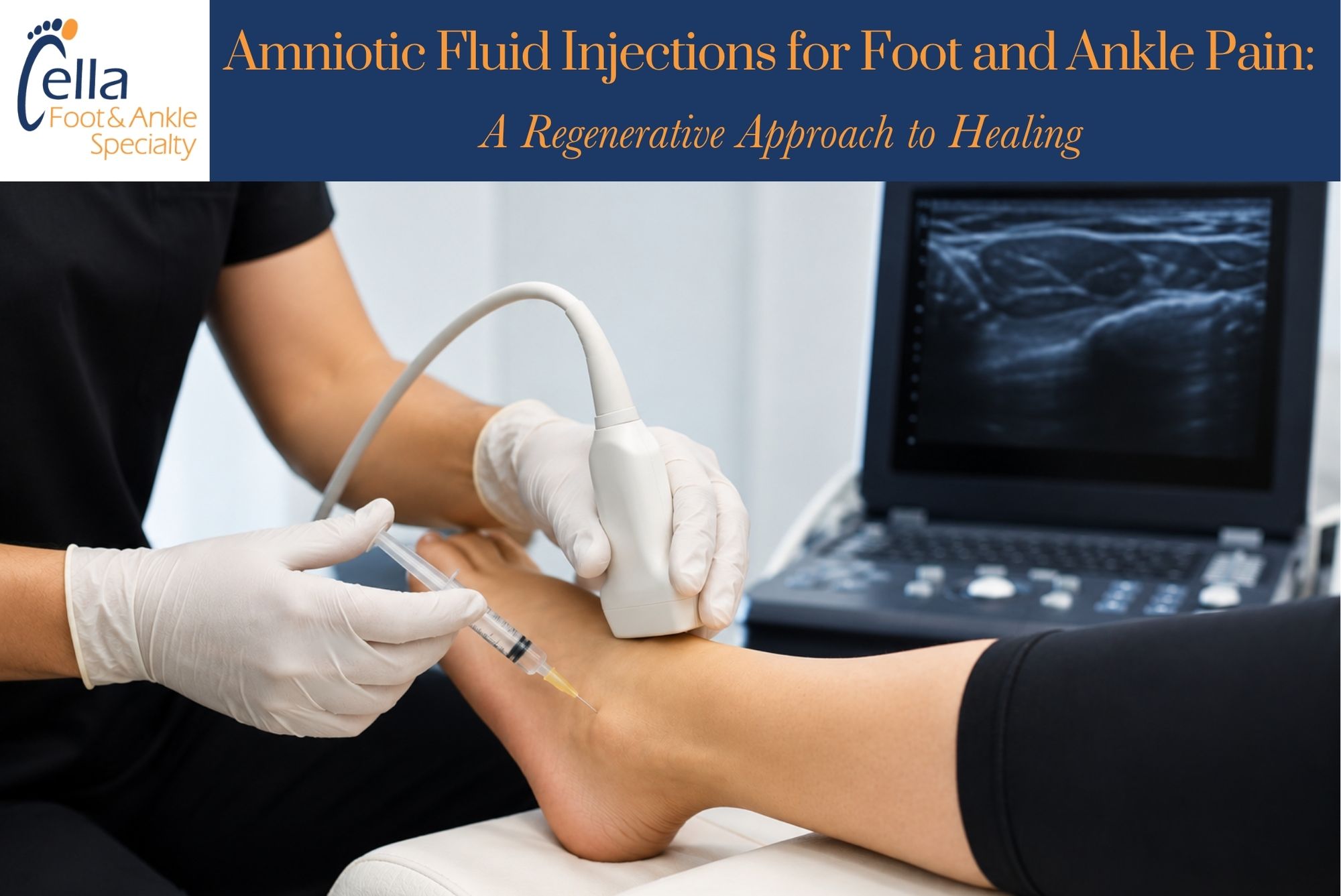
Ultrasound-Guided Precision
Many regenerative injections are performed using ultrasound guidance.
Real-time imaging allows the physician to precisely place the biologic product into the targeted tissue while avoiding surrounding structures.
This improves treatment accuracy and patient safety.
The Injection
The treatment itself usually takes only a few minutes.
After cleaning the skin and preparing the injection site, the amniotic fluid product is carefully injected into the affected tendon, ligament, fascia, or joint.
Most patients tolerate the procedure well.
Recovery
Recovery is generally straightforward.
Patients often receive individualized instructions regarding:
- Temporary activity modification
- Walking boot use if needed
- Physical therapy
- Stretching exercises
- Gradual return to activity
Healing occurs over several weeks as tissues continue to remodel.
Who Is a Good Candidate?
Patients who may benefit include those with:
- Chronic tendon injuries
- Plantar fasciitis lasting several months
- Persistent ligament injuries
- Mild to moderate arthritis
- Failed conservative treatment
- Desire to delay or avoid surgery when appropriate
Candidates should undergo a complete medical evaluation to determine whether regenerative medicine is appropriate for their specific diagnosis.
Who May Not Be an Ideal Candidate?
Certain patients may not be suitable for amniotic fluid injections, including individuals with:
- Active infections
- Certain systemic illnesses
- Severe tissue destruction requiring surgery
- Advanced joint degeneration
- Uncontrolled medical conditions affecting healing
Your physician will discuss whether regenerative treatment is appropriate based on your individual medical history.
How Amniotic Fluid Injections Compare to Other Treatments
Cortisone Injections
Corticosteroid injections primarily reduce inflammation and pain but do not promote tissue repair. Repeated steroid injections may also weaken certain tendons and soft tissues over time.
Amniotic fluid injections focus on supporting the body’s natural healing environment rather than simply suppressing inflammation.
Platelet-Rich Plasma (PRP)
PRP uses the patient’s own blood to concentrate platelets and growth factors.
Amniotic-derived biologics are donor-derived products containing naturally occurring growth factors and extracellular matrix components. Each therapy has unique advantages, and treatment selection depends on the patient’s diagnosis and clinical goals.
Surgery
When structural damage is severe, surgery may still provide the best long-term solution.
However, regenerative medicine may help some patients reduce pain and improve function before surgical intervention becomes necessary.
What Does Current Research Show?
Research involving amniotic-derived biologic therapies continues to grow. Early clinical studies have shown encouraging results for certain tendon disorders, plantar fasciitis, and osteoarthritis by demonstrating improvements in pain and function for some patients.
However, outcomes vary depending on the condition being treated, the specific biologic product used, patient characteristics, and rehabilitation after treatment. Larger, high-quality clinical trials are still underway to better define the long-term effectiveness of these therapies.
Patients should understand that regenerative medicine remains an evolving area of medical research, and treatment recommendations should always be based on current scientific evidence, physician expertise, and individual patient needs.
The Importance of Comprehensive Foot and Ankle Care
Regenerative medicine works best as one component of a comprehensive treatment plan.
Your physician may also recommend:
- Custom orthotics
- Footwear modifications
- Physical therapy
- Stretching programs
- Strengthening exercises
- Weight management strategies
- Activity modification
Combining these therapies often produces better long-term outcomes than relying on injections alone.
Why Choose Cella Foot & Ankle Specialty?
Successful treatment begins with an accurate diagnosis.
At Cella Foot & Ankle Specialty, every patient receives a personalized evaluation to determine the true cause of foot or ankle pain. The practice combines advanced diagnostic technology with evidence-based treatment options to develop individualized care plans that prioritize conservative treatment whenever appropriate.
Whether your condition requires regenerative medicine, custom orthotics, minimally invasive procedures, or surgical care, the goal is always to restore mobility, reduce pain, and help you return to the activities you enjoy.
Amniotic fluid injections are one part of a broader regenerative approach offered at Cella Foot & Ankle Specialty. Patients may also benefit from Euflexxa for joint arthritis or Leneva for restoring lost cushioning in the foot.
Frequently Asked Questions
How long does the procedure take?
Most injections take approximately 15 to 30 minutes, including preparation and post-procedure instructions.
When will I notice improvement?
Some patients notice improvement within several weeks, while others experience gradual progress over two to three months as tissues heal.
How many injections are needed?
Many patients receive a single injection, although treatment recommendations vary depending on the condition and individual response.
Is the procedure painful?
Most patients report only mild discomfort during the injection. Temporary soreness afterward is common and usually resolves within a few days.
Are amniotic fluid injections safe?
These products are obtained from carefully screened donors and processed according to strict medical standards. As with any injection, there are potential risks, including temporary discomfort, infection, or bleeding, which your physician will discuss before treatment.
Will insurance cover regenerative medicine?
Many regenerative medicine treatments are considered elective and may not be covered by insurance. Coverage varies by insurance plan and the specific product being used.
Can amniotic fluid injections eliminate the need for surgery?
For some patients, regenerative treatments help relieve symptoms and improve function enough to delay or avoid surgery. Others with advanced structural damage may still require surgical intervention.
Can I walk after the injection?
Most patients are able to walk afterward, although temporary activity restrictions or a walking boot may be recommended depending on the treatment area.
How do I know if I am a candidate?
A comprehensive evaluation by an experienced foot and ankle specialist is the best way to determine whether regenerative medicine is appropriate for your condition.
Contact Information
Cella Foot & Ankle Specialty
19-21 Fair Lawn Avenue, Suite 2A
Fair Lawn, NJ 07410
Phone: (201) 773-6557
Website: https://cellafas.com
Reviewed by Dr. Antonella Cella, DPM, FACFAS — Cella Foot & Ankle Specialty, Fair Lawn, NJ